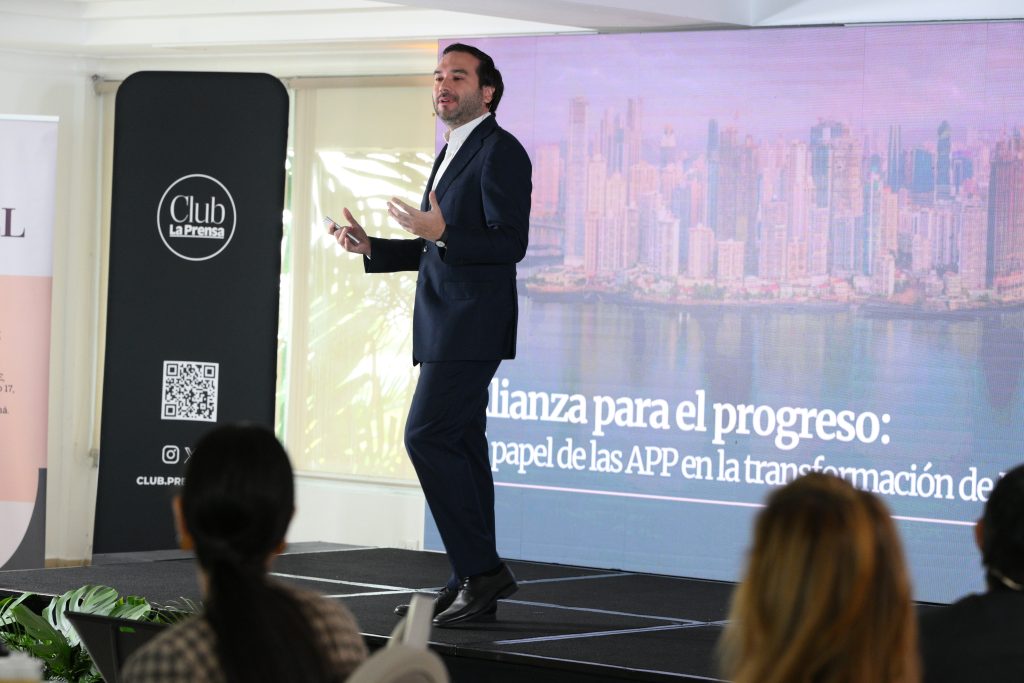
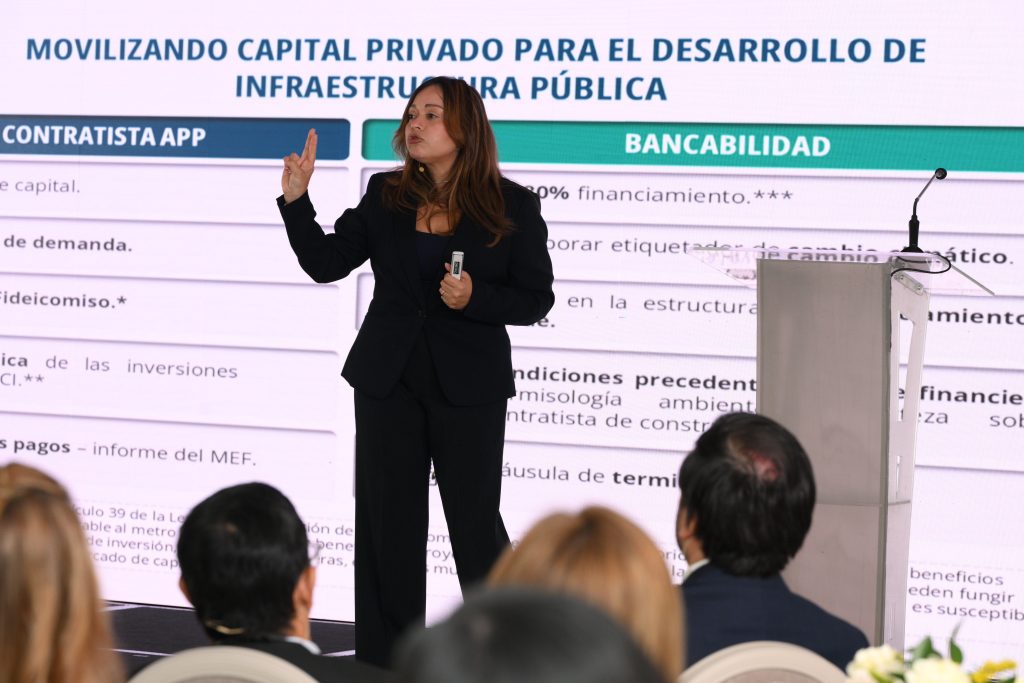
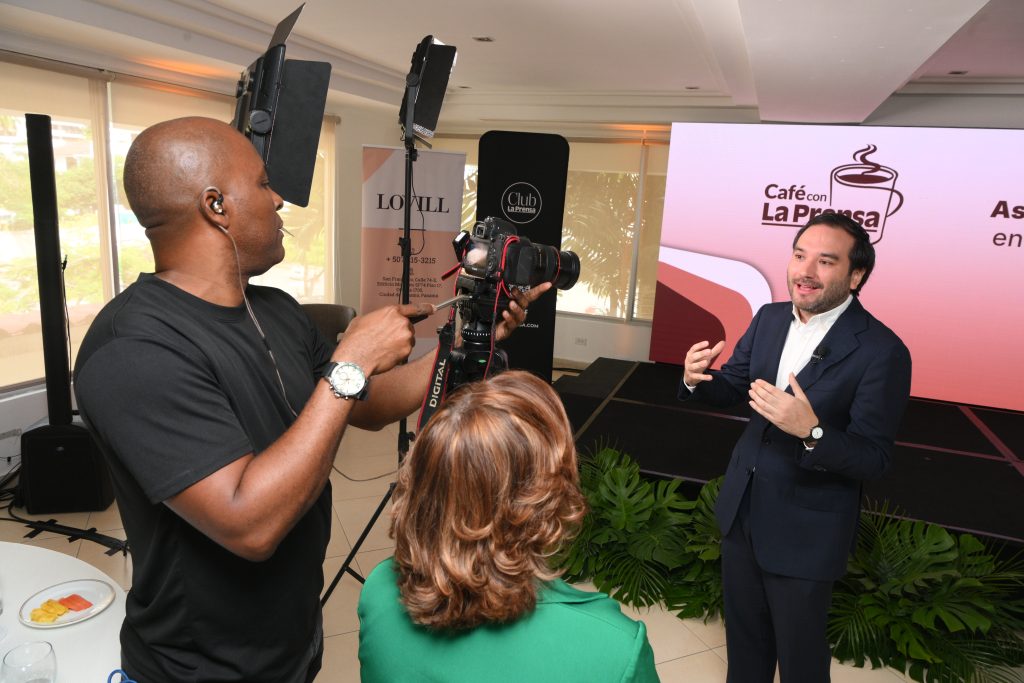
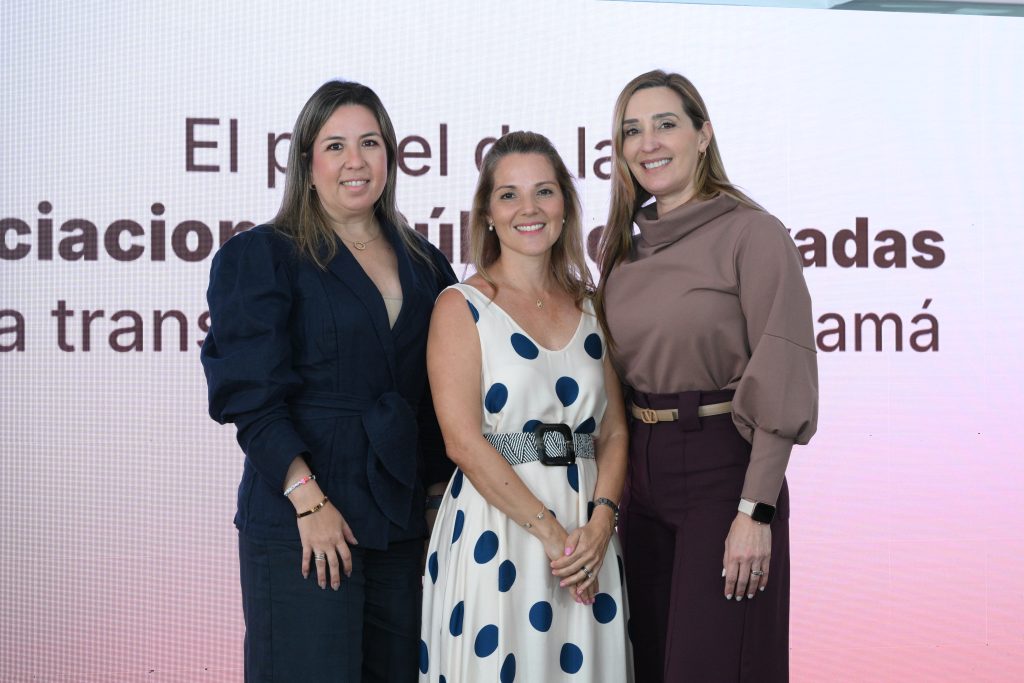
Against a backdrop of fiscal constraints and growing pressure on public investment capacity, Public-Private Partnerships have become a central pillar of Panama’s infrastructure strategy. On February 24, 2026, Gabriel Silva, Of Counsel at LOVILL, participated as a panelist at the Café con La Prensa forum titled “The Role of Public-Private Partnerships in the Transformation of Panama,” alongside Ana Julia Carreira, National Secretary of PPPs, and Carlos Sánchez, Infrastructure Advisory Partner for Central America and the Andean Region at Deloitte. The discussion brought together public sector, private sector, and legal perspectives on the current state of the model and its implications for investors and institutions.
A Model Rooted in Panama’s History
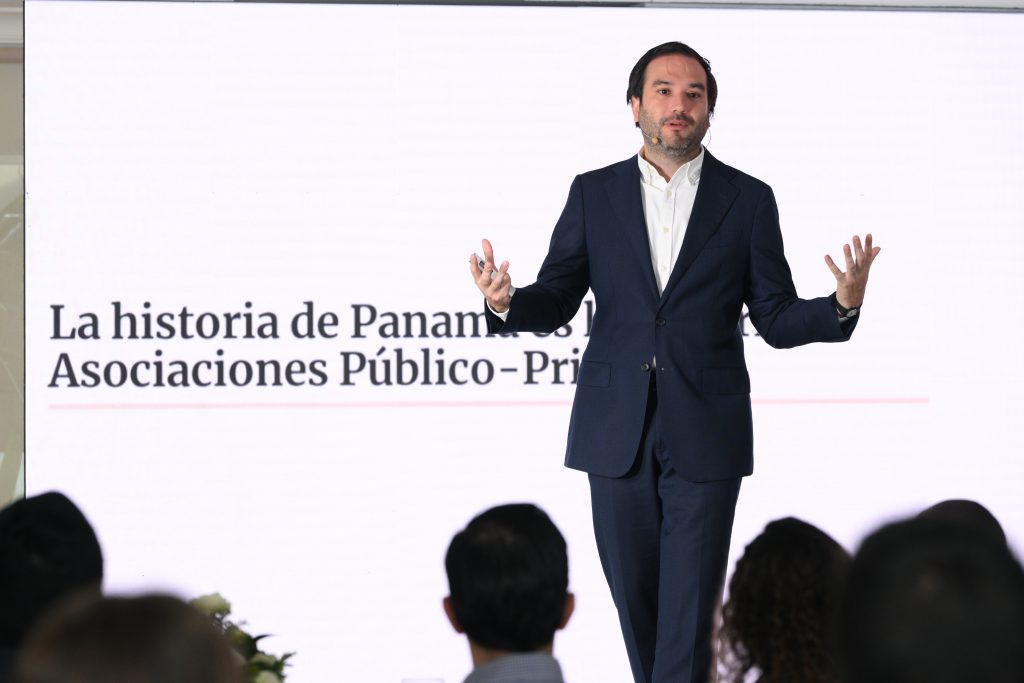
Panama’s relationship with public-private collaboration is not new. As Gabriel Silva noted during the forum, the country’s history is in many ways the history of public-private association: from the railroad concession of 1848 to the construction of the Canal, major national projects have always combined public purpose with private capital. What has changed is the regulatory framework — and the standards of transparency, accountability, and risk management that come with it.
Law 93 of 2019 represents that evolution. It does not reinvent the relationship between the state and private sector, but it elevates it: establishing governance structures, multi-institutional oversight, value-for-money analysis, and dispute resolution mechanisms designed for long-term contracts. As Silva put it, PPPs are taking public contracting to the next level.
Three Problems That PPPs Are Designed to Solve
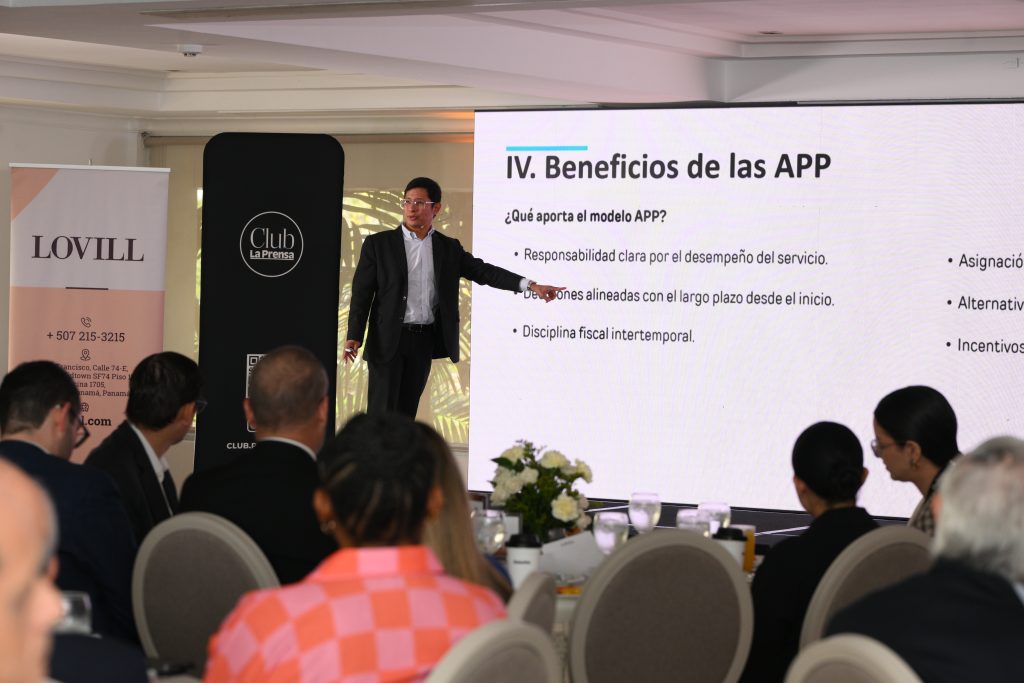
Silva structured his presentation around three structural problems in traditional public contracting — and how the PPP model addresses each.
The first is quality, maintenance, and continuity. Traditional public works focus on delivering physical infrastructure, not sustained service. Maintenance is often left unfunded, deprioritized, or lost between administrations. Under the PPP model, maintenance is not an afterthought — it is a contractual condition for payment. The private party builds knowing it will also maintain, which changes the incentive structure from the beginning.
The second is fiscal and budgetary pressure. Traditional contracting concentrates large payments at the construction phase, creating immediate impact on the deficit. PPP structures invert that timeline: the state may pay little or nothing during construction, with payments distributed across the operational life of the project. This does not reduce the total cost, but it provides greater fiscal flexibility and allows public finances to remain in better shape.
The third is inadequate project structuring, which in traditional contracting has historically produced cost overruns, addenda, and litigation. The PPP framework requires legal, environmental, social, and financial assessments before a project proceeds, along with value-for-money analysis to determine whether the PPP route is genuinely preferable to traditional procurement. A poorly structured PPP, Silva was direct, is worse than no PPP at all.
Governance, Transparency, and Legal Risk
One of the questions most frequently raised by the forum’s audience concerned legal exposure: what happens if a PPP contract is challenged before the Supreme Court?
Silva’s response was equally direct. PPPs are not immune to constitutional challenges — no public contract is. But the governance structure embedded in Panama’s PPP legislation significantly reduces that risk. Multi-institutional review, mandatory reporting across legal, environmental, social, and financial dimensions, and the involvement of multilateral organizations mean that more eyes and more expertise go into structuring each project than in a traditional public contract.
The framework also creates alternative dispute resolution mechanisms — including technical panels — specifically designed to resolve conflicts before they escalate to arbitration or litigation. This, Sánchez noted, is one of the two factors that most reliably prevent major infrastructure projects from stalling: robust institutional systems and effective dispute resolution.
Panama’s PPP framework establishes transparency as a structural requirement throughout the entire process. The public record extends well beyond the contract itself: bids, evaluations, committee decisions, and quarterly progress reports are all publicly available.
The Active Portfolio and What Comes Next
The current PPP portfolio in transportation covers the rehabilitation, maintenance, and operation of three major corridors: the Pan-American Highway East (282 million dollars), the Pan-American Highway West (455 million dollars), and the Centennial Highway (382 million dollars). Together, 438 of Panama’s 750 kilometers of Pan-American Highway are now managed under this model, transferring construction and financing risk to the private sector.
The first project awarded under the new framework — the Pan-American Highway East — secured an international syndicated financing of more than 260 million dollars, with capital contributions from the special purpose vehicle reaching 95 million dollars as of December. Four international banks participated in the syndication.
The portfolio extends well beyond road infrastructure. Projects under development or active evaluation include a maximum security correctional facility, agro-industrial plants through the Agricultural Marketing Institute, educational infrastructure, a potential fourth electricity transmission line, and discussions around private participation in the Panama Metro. The PPP framework, Carreira emphasized, is not limited to infrastructure — it extends to services and equipment, and its potential to generate employment outside the Canal corridor is a strategic priority.
A Framework Built to Last
During the forum, panelists pointed to several structural features that distinguish Panama as a destination for infrastructure investment. The session closed with a shared perspective: Panama’s PPP framework is functional, transparent, and actively expanding. The pipeline is real, the regulatory architecture is in place, and the projects already underway offer a solid early track record.
For LOVILL, this forum reflects an ongoing commitment to Panama’s infrastructure ecosystem — one that goes beyond the conversation. Our Projects and Infrastructure practice has been involved in the legal and institutional work surrounding Panama’s PPP framework since its early stages, and continues to advise on the structuring dimensions that these projects demand.

To watch the full session, visit the recording on YouTube.